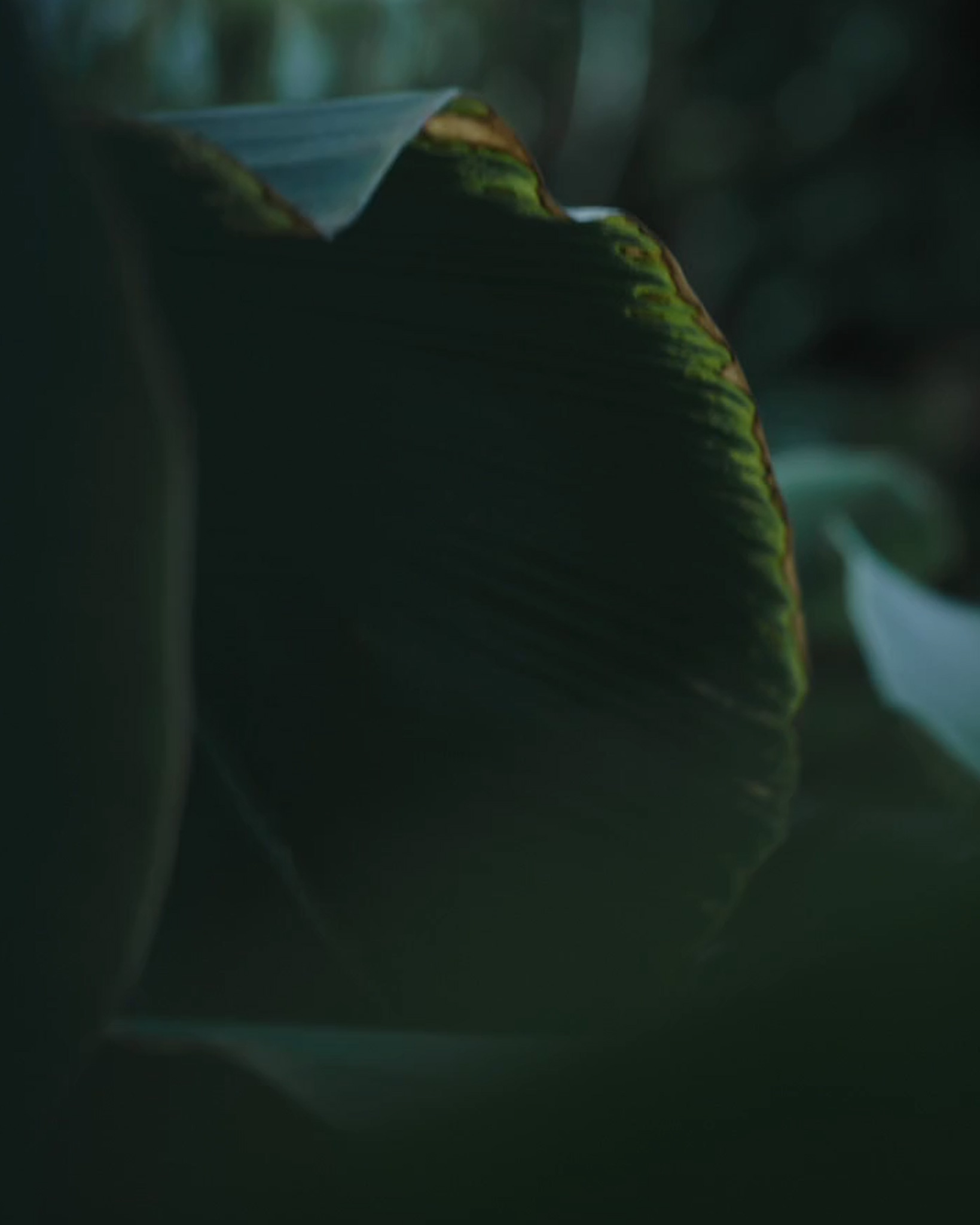
Alien Trees
2026
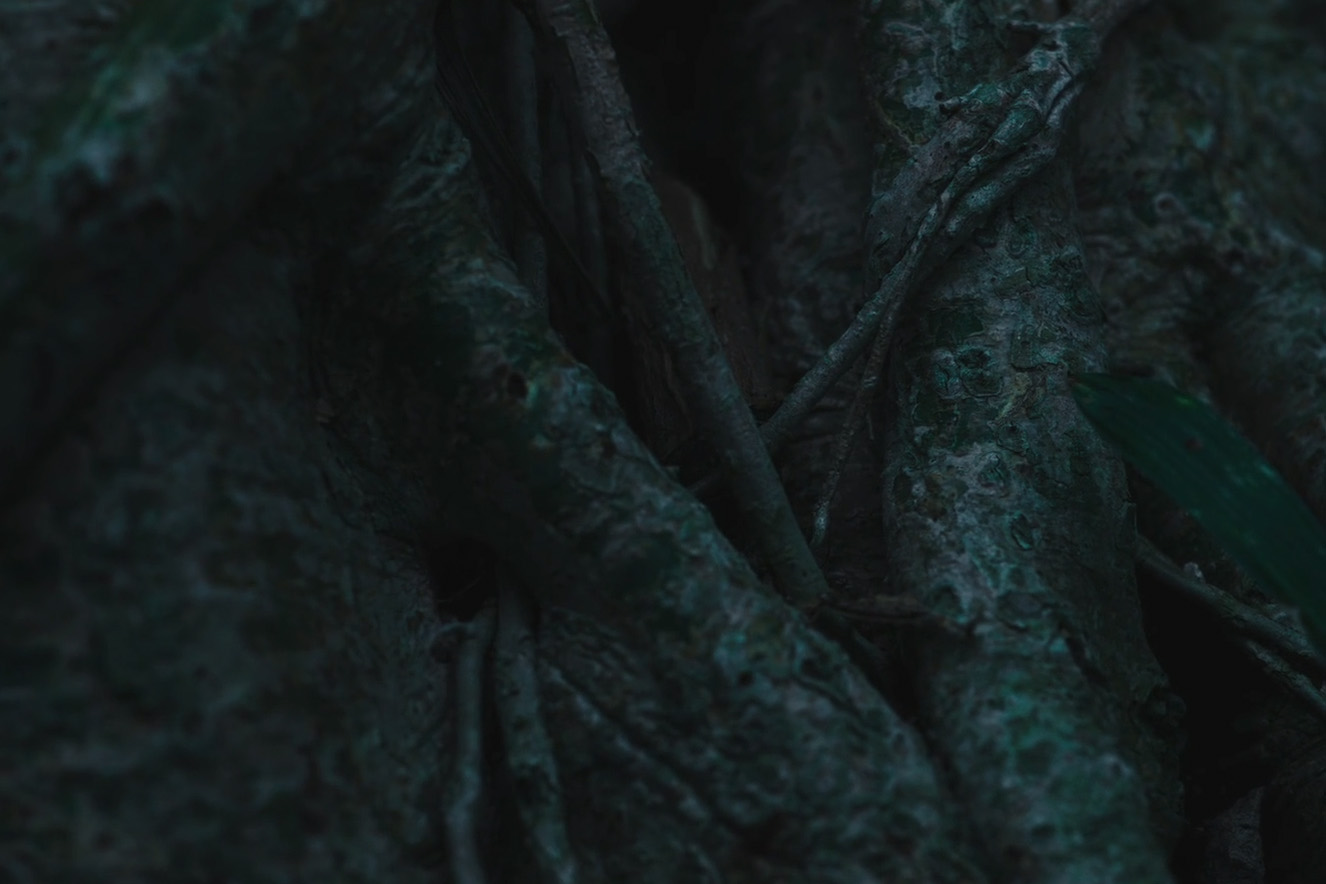
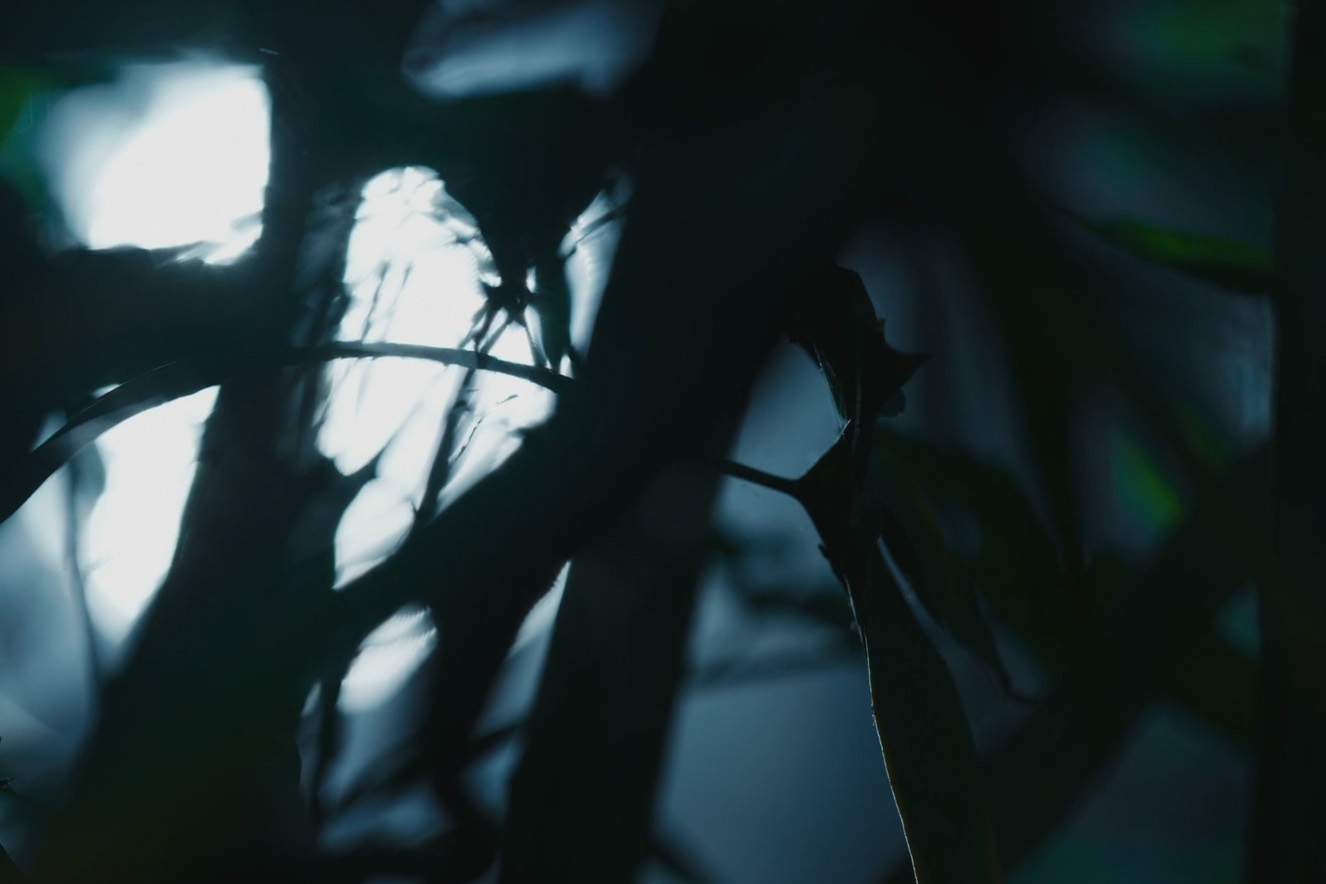
Inside a modern greenhouse, an enigmatic entity surveys the inflorescence of
its collection.
4k film, robotics, motion control, software, greenhouse, speakers, amplifier, wall construction.
The film Alien Trees is one with a beginning but not an end. Underneath its
cinematic surface lies the alien, here a synthesis of origin and extraction, natural and
supernatural, land and myth, time and space, simulation and reality. Its soundtrack –
which emerges from a set of three orifices located on the projected wall – is composed
of the throbbing noises of the wobbling motion of a robotic arm, modified contact
microphones and on-set diegetic recordings.
According to the myth propagated by Pliny the Elder in his Naturalis Historia, around 30 CE the Roman Empire built what is assumed to be the first recorded attempt of an artificial environment, the predecessor of the greenhouse. In order to improve Emperor Tiberius declining health, the royal physicians recommended the emperor to eat one cucumber a day. Therefore the Romans traded in seeds and grains, and created an artificial environment to have cucumbers available all year-round. The cucumbers were cultivated and stored under frames or in small houses glazed with oiled cloth.
By the 15th century, under the Joseon dynasty, a breakthrough in artificial environments occurred in Korea. The desire to cultivate vegetables and other plants during the winter in order to satisfy the nobility, introduced larger systems for extraction, transportation and sustenance of non-endemic grains and plants to become part of these controlled new environments.
During the 16th century, greenhouses caught on in the Netherlands, England and France. There and then, royal courts housed large collections of world plants acquired from the explorers that they sponsored. The structures, a symbol of wealth and prestige, were luxurious glass and stone houses built to sustain exotic life and for the pleasure of monarchs, while serving as places for scientific study in herbal medicine and agriculture.
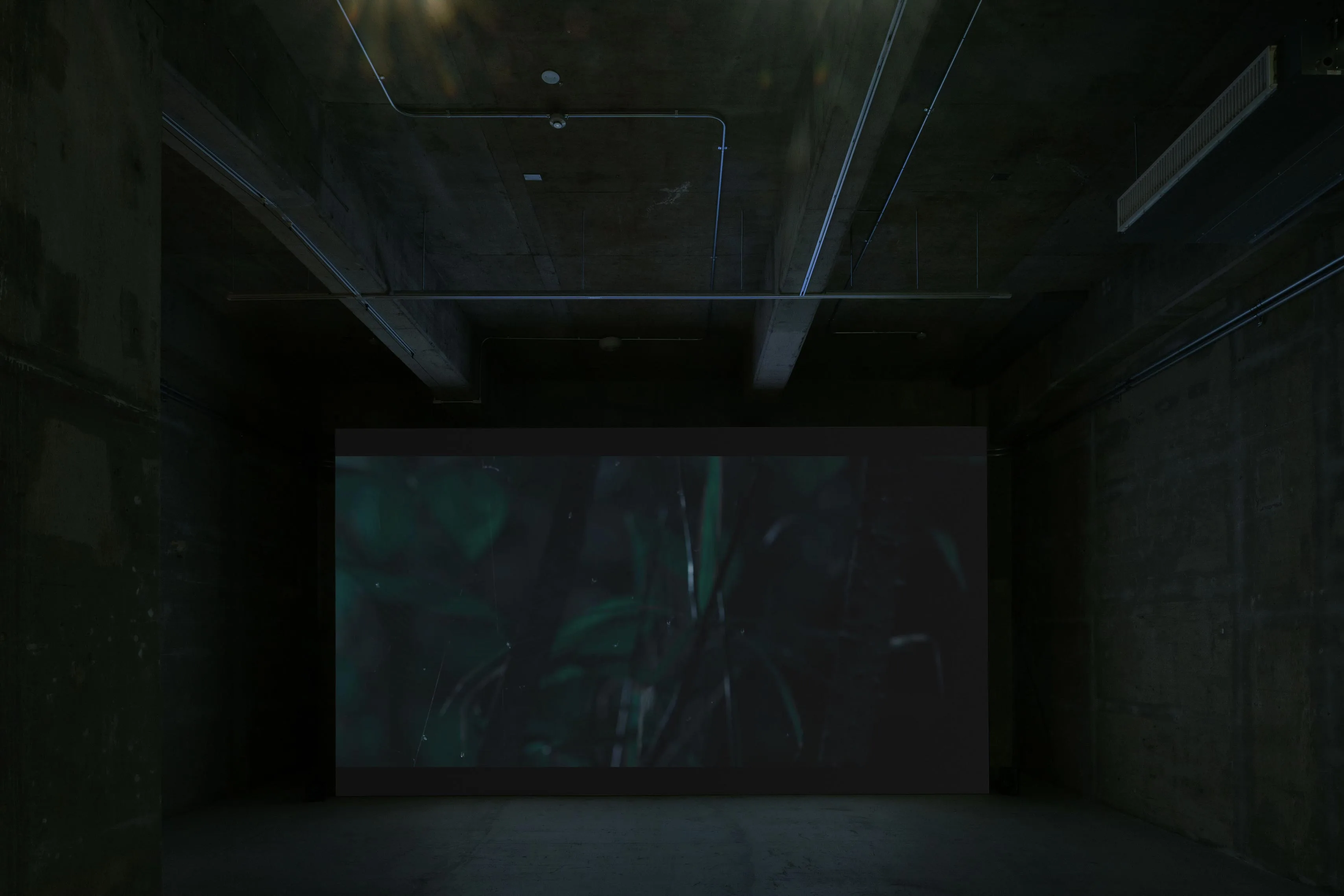
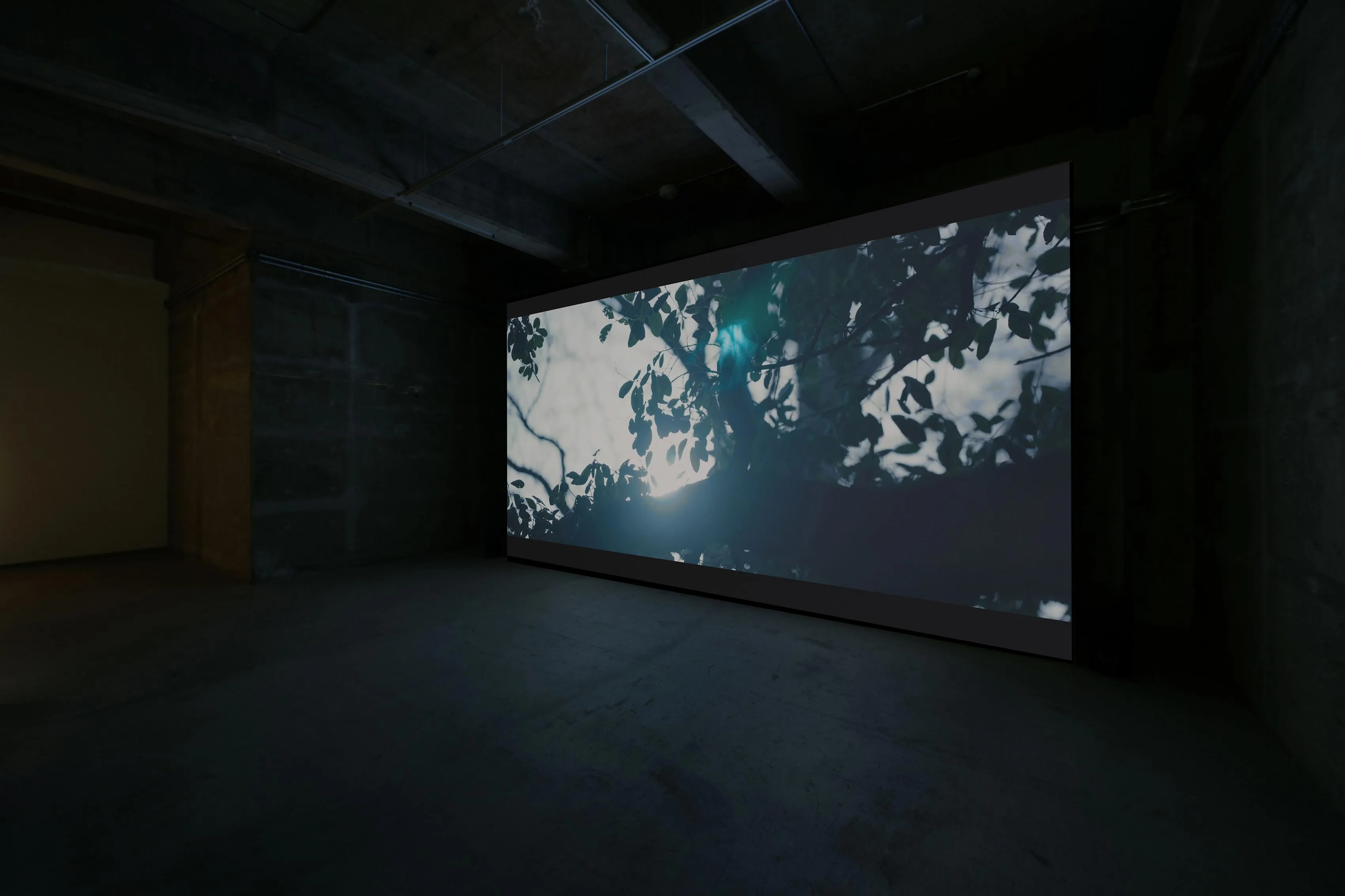
Alien Trees, 2026, 2 min preview.
Created by LJ Mayorga, cinematography by Jeremy Negley, robotics by Diego Jocelyn, editing by Jeremy Negley and LJ Mayorga, color by Nikalaus Pinney, sound design and mixing by LJ Mayorga.
Cato, Marcus Porcius. «Cato, the Censor, On Farming.» Translated by Ernest Brehaut. New York: Columbia University Press, 1933.
Hollander, D. B., «Farmers and Agriculture in the Roman Economy», Routledge, 2019.
Hopkins (1978). «Conquerors and Slaves». New York: Cambridge University Press. pp. 1–9. ISBN 978-0521219457.
Silvertown, Jonathan (1985). Survival, Fecundity and Growth of Wild Cucumber, Echinocystis Lobata». Journal of Ecology. 73 (3): 841–849.
Minter, Sue (2003). «The Apothecaries' Garden». Sutton. p. 4. ISBN 978-0-7509-3638-5.
«Cambridge Glasshouse». Newport, North Humberside. 9 May 2013.
Lynden (26 April 2021). «The Palm House At Kew Gardens: Iron, Climate Control And Commercialism-An Encyclopedia of Architecture And Colonialism». University of British Columbia. Retrieved 4 April 2023.
«Light-altering greenhouse paint could lengthen growing season». Society of Chemical Industry. 22 November 2024. Retrieved 26 October 2025.
«UK scientists unveil light-optimising greenhouse coating to extend produce growing seasons». New Food Magazine. 21 November 2024. Retrieved 26 October 2025.
Janick, Jules, Paris, Harry. «History of Controlled Environment Horticulture: Ancient Origins». HortScience, American Society for Horticultural Science. 13 Jan 2022.
Arnoldia Magazine. The Magazine of the Arnold Arboretum. Vol 74 Number 4, 2018.
Hill, A. W. «The history and functions of botanic gardens». 1914.
N. B. WARD, F.R.S., F.L.S., «On The Growth of Plants in Closely Glazed Cases». Library Of The New York Botanical Garden. 1852.